
DRT & Equity: Inclusive Transport by Design

Mobility is not a privilege—it’s a right. Yet many public transport systems still fail to reach the people who need them most: the elderly, people with reduced mobility, digitally excluded citizens, and those living in remote or underserved areas. That’s where Demand-Responsive Transport (DRT) becomes a critical tool for transport equity.
At its core, DRT is about flexibility. But flexibility alone isn’t enough. A truly inclusive DRT service must be designed from the ground up with equity in mind.
More Than an App
Smartphone apps are often seen as the cornerstone of DRT—convenient, fast, and intuitive. But what happens to users who don’t have access to mobile devices or who are not digitally literate? Inclusive design requires multiple access channels, including:
- Telephone booking lines (with human support)
- Walk-in booking points at public facilities
- Community-led outreach for onboarding
Shotl’s platform enables all of the above, ensuring that the system is not limited to the tech-savvy. Every resident should be able to book a ride, no matter their device or digital skill level.
Respecting Diverse Needs
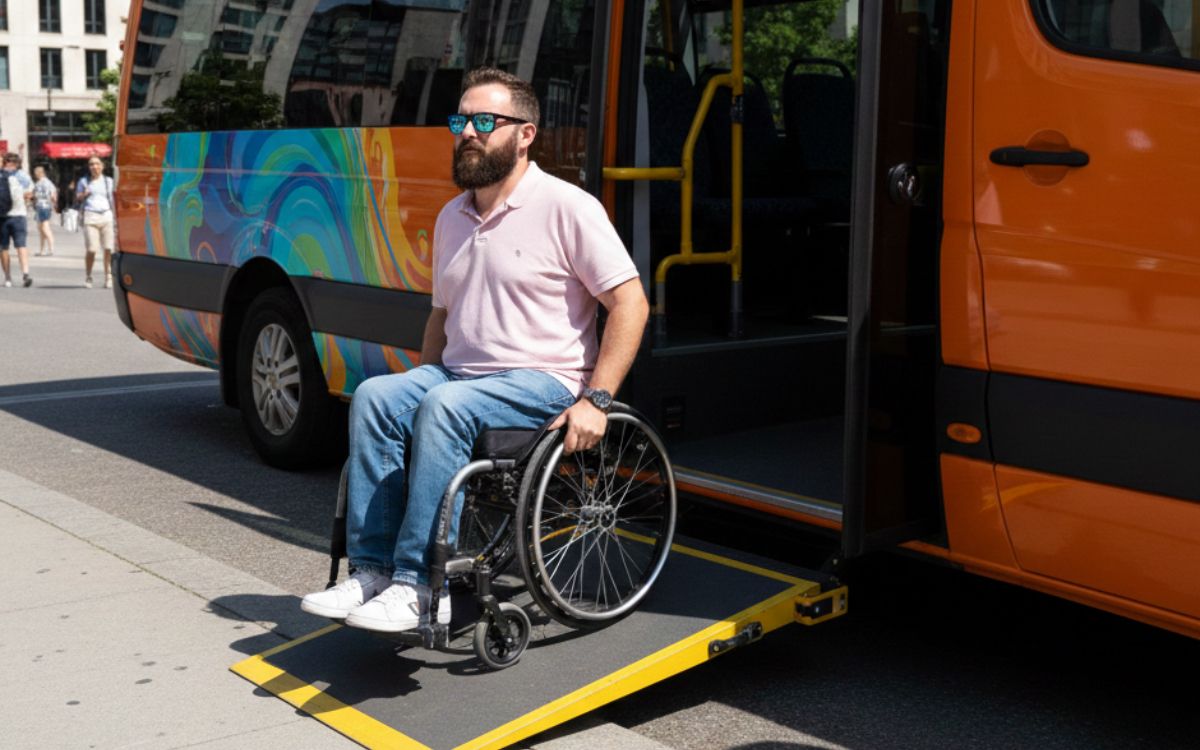
People with reduced mobility (PRMs) often face additional barriers in public transit: long walking distances to stops, rigid schedules, or inaccessible vehicles. A DRT system must therefore include when possible:
- Accessible vehicles: Low-floor minibuses or vans equipped with ramps, lifts, wheelchair securement systems, and sufficient space for mobility aids.
- Door-to-door service: Unlike fixed-route buses, DRT can adapt routes to minimize walking distances, picking up and dropping off passengers as close as possible to their origin and destination—ideal for those with mobility limitations.
- Assistance features: Options for traveling with companions or caregivers and real-time visualization of the route, with updated pick-up and drop-off information
Shotl’s technology supports these elements by allowing operators to configure vehicle types and optimize routes.
Equity as the Foundation of Sustainable Mobility
Demand-Responsive Transport is more than a technological innovation—it's a pathway to a more just society. By prioritizing multiple access channels, accessible vehicles, adaptive routing, affordability, and community engagement, DRT can dismantle barriers that have long excluded vulnerable groups from essential mobility.
With the Shotl platform, operators and public authorities have the tools to design services where equity is not an afterthought, but the guiding principle. When transport is inclusive by design, everyone moves forward, together.
Ready to implement a truly inclusive transport system in your territory? Contact Shotl today at hello@shotl.com and discover how we can help you make equitable mobility a reality.
Popular posts

23.10.23
Fixing peak-season tourist mobility
The demand for seasonal transportation services in popular vacation destinations surges in peak seasons, presenting a unique logistical challenge.
Albert Tresserras

26.09.22
Cities are steel warehouses, but Swvl’s technology meets the challenge
Mobility today is poorly optimized. With an average occupancy of just over one user per car, and vehicles parked 95% of the time, cities are basically turned into steel warehouses. And this is, in the end, the big challenge to be solved.
Sergi Paniagua

27.01.20
Visit us at MOVE 2020
The Shotl team will be attending Move 2020 and with our own stand in the start-up village, we are looking forward to meeting with the most innovative and inspiring people