
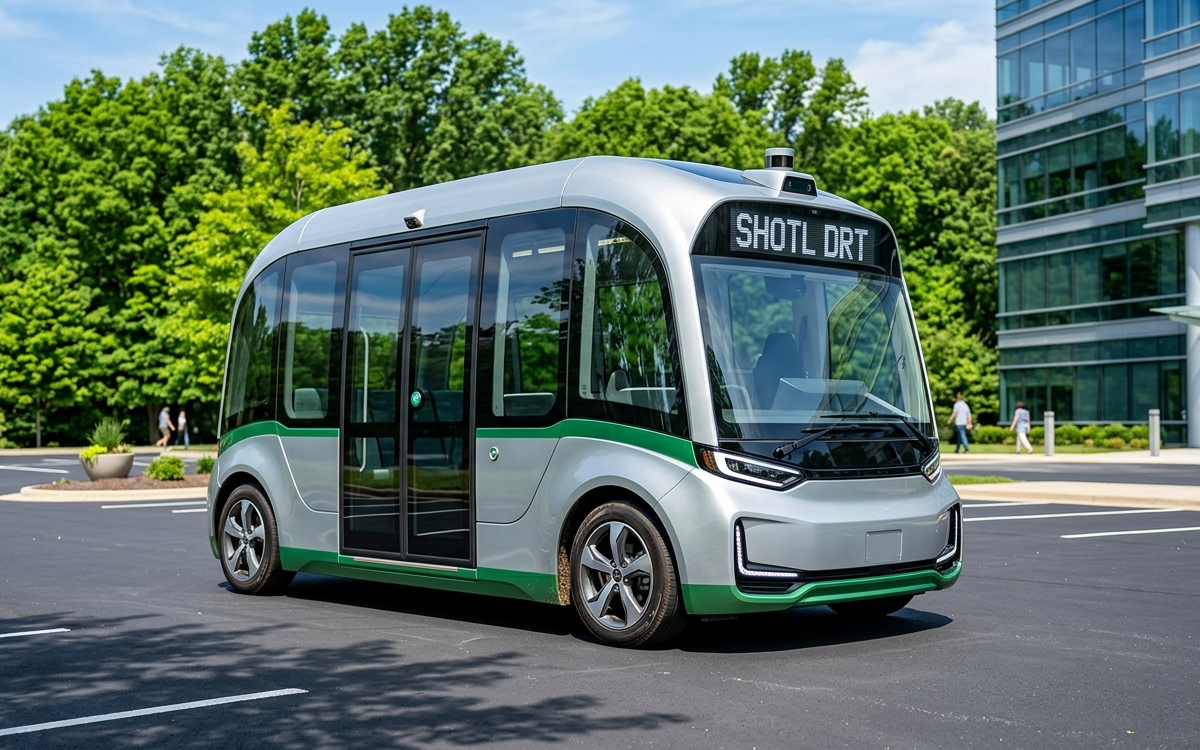
DRT for Climate Goals: Reducing Emissions One Shared Ride at a Time

Transport remains one of the main contributors to global emissions, and cities across the world are searching for solutions that can realistically reduce their environmental footprint. Electric cars, cycling infrastructure, and rail expansion are all part of the conversation. Alongside these initiatives, Demand-Responsive Transport (DRT) is quietly becoming an important tool for improving mobility while supporting climate goals.
Why Private Cars Are a Climate Challenge—and How DRT Offers a Better Way
Private vehicles continue to dominate short- and medium-distance travel, particularly in suburban, peri-urban, and rural areas. In these environments, traditional bus routes often struggle with low demand, infrequent service, or inconvenient stops. As a result, many people rely on driving alone simply because there are few practical alternatives.
DRT approaches the problem differently. Through a mobile app or phone booking, passengers can request a ride from nearby virtual stops. Software then groups compatible trips together and assigns them to shared vehicles. The experience can feel similar to a taxi, but with multiple passengers sharing the route, which improves efficiency and reduces overall costs.
When several passengers share a vehicle instead of driving separately, the total distance traveled by cars decreases. Fewer vehicles on the road can mean lower fuel consumption, less congestion, and reduced emissions. In areas where fixed-route public transport is difficult to operate efficiently, DRT can offer a more sustainable alternative.
Smarter Routing for a Smaller Carbon Footprint
Traditional buses operate on fixed routes and timetables, regardless of the number of passengers onboard. During quieter periods or in low-density neighborhoods, this can result in vehicles running with very few riders.
DRT services work differently. Vehicles are dispatched only when passengers request trips, and routing software continuously adjusts routes to combine journeys and minimize unnecessary detours. This approach can improve vehicle occupancy while avoiding empty or underused routes.
In the right contexts—particularly in low- to moderate-demand areas—DRT can operate with fewer vehicle hours and fewer empty miles than conventional bus services. That operational efficiency can translate into lower emissions and better use of transport resources.
Perfect Fit for Electric Fleets and Zero-Emission Zones
Because DRT systems are centrally managed and operate with clear demand patterns, they can work well with electric vehicle (EV) fleets. Operators can plan charging schedules, manage vehicle rotations, and optimize routes based on battery range and service demand.
Several services have already moved in this direction, deploying electric minibuses for on-demand transport in low-emission districts, tourist areas, and corporate shuttle programs. In one UK deployment, an all-electric DRT service was projected to save roughly 16 tonnes of CO₂ annually while improving access to mobility in areas previously underserved by public transport.
When shared mobility is combined with zero-emission vehicles, the environmental benefits increase further: fewer individual cars, cleaner urban air, and quieter streets.
Rich Data to Guide Smarter, Greener Decisions
Every DRT journey generates detailed operational data—origins and destinations, vehicle occupancy, trip patterns, and estimated emissions reductions. This information can help cities and transport authorities better understand how people move and how services perform.
- Measure emissions reductions linked to shared mobility
- Identify areas with strong dependence on private cars
- Support investment decisions for sustainable transport projects
- Adjust services to improve both environmental and social outcomes
Access to reliable mobility data can also help cities report progress toward climate commitments and evaluate which policies are delivering measurable results.
A Natural Partner to Walking, Cycling, and Mass Transit
DRT is not intended to replace traditional public transport. Instead, it can complement existing networks by filling the gaps where fixed routes are difficult to operate effectively.
One of its most common roles is providing first- and last-mile connections to train stations, mobility hubs, or high-capacity bus corridors. By simplifying access to these networks, DRT can make public transport a more attractive option for everyday travel.
In several pilot programs, flexible on-demand services have encouraged travelers to reduce their reliance on private cars. In one Australian trial, for example, a significant share of users reported reconsidering their car ownership after using the service for several months.
Conclusion: Practical Innovation for Real Climate Progress
Reducing transport emissions requires solutions that work in everyday life, not only in theory. Demand-Responsive Transport offers a practical way to improve mobility while lowering the environmental impact of travel.
By combining shared rides, data-driven routing, and increasingly electric fleets, DRT can help cities and regions move toward cleaner and more efficient transport systems.
Whether serving suburban neighborhoods, rural communities, or specific urban corridors, DRT provides a flexible option for reducing emissions while improving access to mobility—one shared ride at a time.
Popular posts

26.06.25
Beyond Towns: Unconventional Use Cases for DRT
Albert Tresserras

27.04.20
Shotl and Sensible 4 adapt its autonomous driving pilot in Helsinki du
Shotl and Sensible 4 are adjusting our plans for this spring’s FABULOS autonomous driving pilot — one of the main self-driving events for us this year.
Adrià Ramírez

29.08.22
Interview with mobility expert Benjamin de la Peña
This month we chat with Benjamin de la Peña, CEO of US-based Shared-Use Mobility Center, a public-interest organization working to replace car-centric transportation with people-focused shared mobility to fight climate change and promote equity.