

How mobility hubs can accelerate post-pandemic recovery

We were encouraged to read that Scotland is planning to introduce mobility hubs following a model pioneered in some other European cities. These hubs bring together different forms of transport like busses and trains alongside individual mobility like e-scooters and bikes in a single location.
The definition of a mobility hub is pretty flexible: It could be anything from a single bus stop with bike-share parking close by, to several transit modes coordinated around public services like hospitals, to a custom-built multimodal hub in a new urban development. The important thing is that it unites various public and private modes, facilitates connections and changes and improves access to sustainable transit by combining and structuring networks to answer the needs of more users than current linear routes.
So, what’s the difference between this and existing transport interchanges? Well, while many major train or bus stations do feature elements of a hub, most are not yet fully multi-modal, and services are not always coordinated. As an example, the Sants train station in Barcelona, where we’re based, has two subway lines, a coach station and local, regional, national and international rail lines. Taxis buzz around the concourse outside and local city busses stop nearby. But all these different services and schedules are not coordinated and, while there is shared bike parking nearby, the station itself lacks infrastructure for cycling or e-scooters. It could also benefit from better signage, integrated journey planning and real-time information about all modes. A true mobility hub would provide all this and more.
And by more, we mean that mobility hubs can also be destinations and services in their own right. This is an interesting concept given our recent enforced lifestyle changes and all the buzz about the 20-minute city. As well as transit, a hub can offer Wi-Fi and charging points, shops, workstations, cafés, even healthcare and leisure facilities and green space. Making it a useful and attractive place to be therefore not only improves transit access, it promotes urban regeneration and generates much needed economic opportunities for post-pandemic recovery.
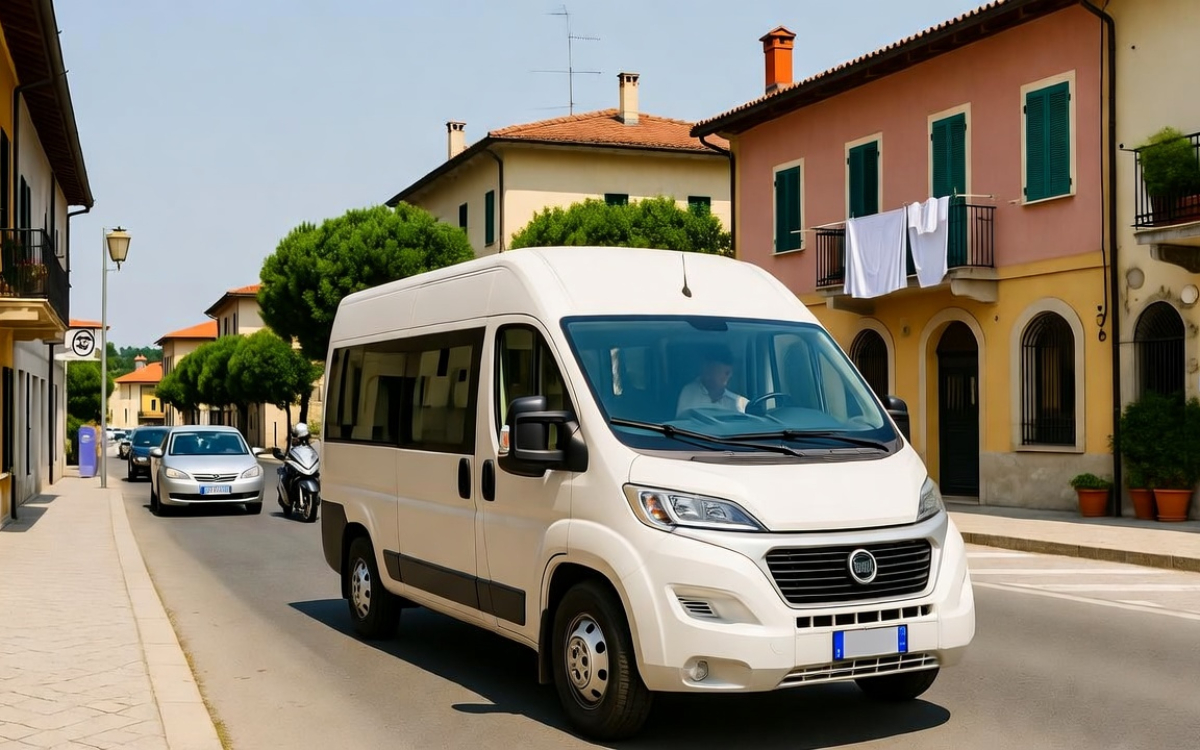
But it’s not just for cities: In smaller towns and rural areas, a mobility hub can be configured around existing bus or train stations. Here, though, it’s even more important to also provide first/last-mile transit as this is often lacking outside big cities and one reason many people remain dependent on private vehicles. Demand-responsive transit (DRT) minibuses or vans are the perfect fit here as they adapt to periods of low, fluctuating or unpredictable demand and can, therefore, be operated at a lower cost than fixed-route-and-schedule lines.
It’s important to find silver linings during the ongoing pandemic and we think mobility hubs are one. At a time when everyone’s schedules are disrupted, grouping multiple modes in a mobility hub is an opportunity to provide more comprehensive, flexible transit services that offer viable alternatives to private cars going forward.
Popular posts

25.10.24
Shotl attends Smart City Expo and Global Mobility Call this November
November 2024 is an important month for urban mobility, and Shotl is excited to be part of two key events: the Smart City Expo World Congress in Barcelona and the Global Mobility Call in Madrid.
Sílvia Coronado
27.10.25
Anti-Cannibalisation Strategies: Making DRT and Fixed Routes Work Together
Anti-cannibalisation strategies ensure DRT complements, not competes with, fixed routes—using geofencing, time controls, and GTFS data to fill service gaps and enhance overall transport efficiency.
Albert Tresserras

22.02.21
Going the last mile for small-town MaaS
We’re used to talking about multimodal MaaS in big cities, but that’s often where the conversation ends. However, we believe there are also compelling reasons to implement it in smaller municipalities, with a few adjustments.